

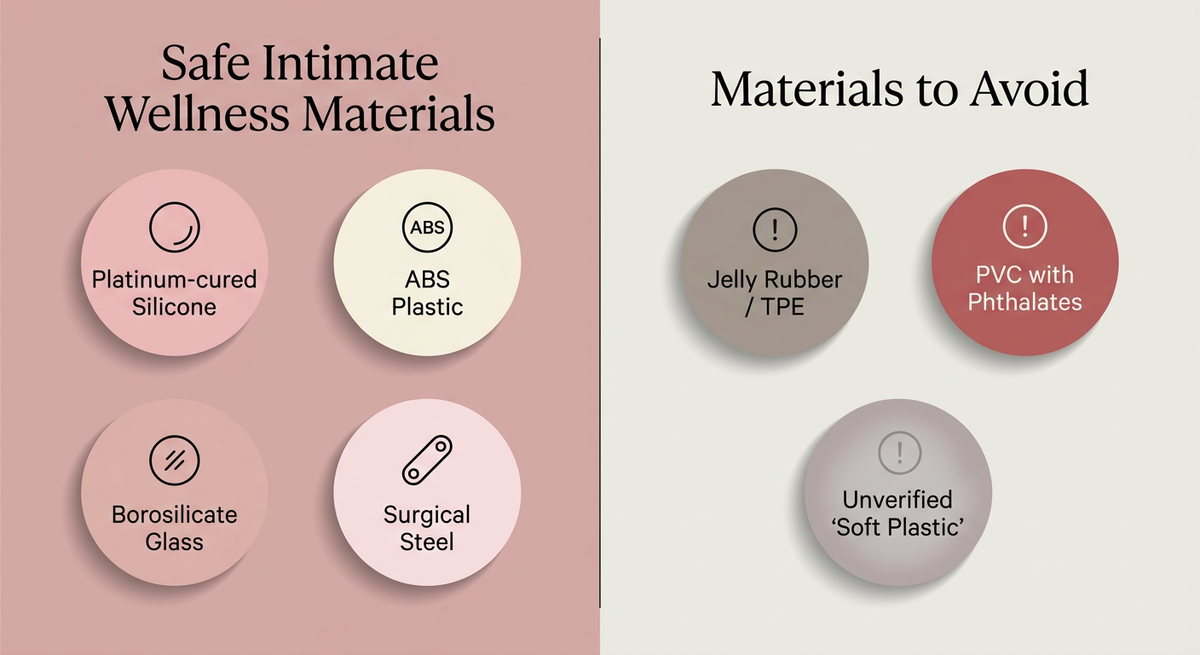
There's a moment that changes how people think about pleasure products: when they realize the material matters more than the shape, the price, or the brand name. A beautiful device made from the wrong substance isn't just disappointing — it can be harmful. This guide explains exactly what to look for, why it matters, and how Lumakind verifies every product before it reaches the store.
Why Material Safety Isn't Optional
When people buy their first intimate wellness product, material safety is rarely the first question. Shape, intensity, and appearance dominate the decision. But the substance that touches your body — especially in intimate areas with high sensitivity and absorption potential — determines whether the experience is healthy or risky.
A Reddit discussion in r/TheGirlSurvivalGuide described what happens when materials aren't verified: users reported burning, stinging, and irritation that turned out to be reactions to unverified rubber blends or latex allergies. These reactions aren't rare side effects — they're predictable outcomes of using porous, chemically unstable materials in sensitive applications.
The problem isn't just discomfort. Porous materials trap bacteria in microscopic surfaces, making full sanitation impossible. Over time, this creates hygiene risks that cleaning alone can't solve. Non-porous, chemically stable materials — specifically medical-grade silicone, ABS plastic, borosilicate glass, and stainless steel — eliminate both the immediate irritation risk and the long-term hygiene problem.
This isn't a luxury preference. It's a baseline health requirement.
The Four Safe Materials (And What Each Means)
Medical-Grade Silicone
Not all silicone is the same. "Medical-grade" means the silicone has been tested and certified for biocompatibility — the same standard used for medical implants and surgical instruments. It's non-porous, hypoallergenic, chemically stable, and resistant to bacterial growth.
What to look for: Product descriptions should specify "medical-grade silicone" or "platinum-cured silicone," not just "silicone blend" or "soft silicone." Platinum-curing is a specific manufacturing process that eliminates residual catalysts — the chemical residues that can cause irritation in lower-grade silicone.
How Lumakind verifies it: Every silicone product in the store is sourced from manufacturers that provide material certification documentation. The Zemalia Peachy Clit Sucking Vibrator — AUD $79.00, the SVAKOM Erica Wearable Clit & G-Spot Vibrator — AUD $99.00, and every device in the Clitoral Stimulators collection — 45 curated items uses certified medical-grade silicone with documented sourcing.
Cleaning: Warm water with mild unscented soap, or a dedicated toy cleaner. Can be fully submerged if waterproof. Doesn't absorb odors or bacteria.
ABS Plastic
Acrylonitrile butadiene styrene (ABS) is a hard, smooth thermoplastic. It's non-porous, chemically stable, and commonly used in the outer shells of bullet vibrators and control interfaces. It doesn't have the softness of silicone, but its hardness provides direct vibration transmission without dampening.
What to look for: "ABS plastic" should appear in material descriptions for hard-shell devices. If a product describes only "soft plastic" or doesn't specify the plastic type, it's likely a lower-grade blend.
Best for: Users who prefer direct, unfiltered vibration; people who want easy-to-clean hard surfaces; devices where the outer material needs structural rigidity.
Borosilicate Glass
A specialized glass formulation resistant to thermal shock and physical impact. It's completely non-porous, fully sterilizable, and compatible with all types of lubricant. Its weight and thermal properties create a different experience from silicone or plastic.
Best for: Advanced users who want temperature play (warming or cooling the device before use); people who prioritize complete sterilization; users exploring with non-flexible, precisely shaped devices.
Cleaning: Can be fully sterilized — boiled, bleached, or autoclaved — without material degradation. Fully non-porous.
Stainless Steel
Surgical-grade stainless steel is non-porous, fully sterilizable, and extremely durable. Like glass, it allows temperature play and provides weight-based stimulation that softer materials can't replicate.
Best for: Users who want the most durable option possible; people exploring temperature and weight dynamics; anyone who prioritizes complete sterilization above all else.

The Materials to Avoid (And Why)
Jelly Rubber / TPE / TPR Blends
These are porous, chemically unstable, and often contain phthalates — plasticizers linked to endocrine disruption. The porous structure traps bacteria permanently, making full cleaning impossible. Over time, these materials can degrade, release chemical residues, and cause irritation or allergic reactions.
Why they're still sold: They're cheap to produce and can be made to look and feel like premium materials. Without certification requirements in many markets, manufacturers can label products vaguely — "soft silicone blend," "realistic feel," or "body-safe rubber" — without specifying the actual chemical composition.
How to identify them: If a product doesn't specify the exact material ("medical-grade silicone," "ABS plastic," "borosilicate glass"), assume it's a lower-grade blend. If the price seems unusually low for the feature set, the material is likely where the cost was cut.
PVC with Softening Agents
PVC requires chemical softeners (phthalates) to become flexible. These softeners aren't chemically bound to the PVC — they migrate out over time, especially when exposed to heat, friction, or body contact. The result is a material that changes texture, releases residues, and poses health risks with prolonged use.
What this means at Lumakind: No product in any collection uses jelly rubber, unverified TPE, or PVC with softeners. The store's sourcing policy requires material certification for every item, and products that don't meet the standard aren't included — regardless of price or popularity in other markets.
How to Verify Material Safety Before Buying
Read the Specification, Not Just the Marketing
Marketing language uses terms like "premium," "luxury," or "body-safe" without legal definition. Material specifications are specific. Look for exact terms: "platinum-cured medical-grade silicone," "ABS plastic," "borosilicate glass," "surgical-grade stainless steel."
Check for Certification References

Reputable manufacturers provide material testing documentation. While not every store publishes full certification files, the presence of specific material terminology — rather than vague descriptions — indicates that the manufacturer has documentation available.
Examine Price in Context
Material quality affects price. A device using certified medical-grade silicone costs more to produce than one using generic rubber blends. If a product with premium features is priced significantly lower than comparable items from verified sources, the material is the most likely place where quality was reduced.
This doesn't mean expensive products are automatically safe — it means that very low prices for complex features should trigger closer inspection of the material specification.
Material Safety and Product Selection
Understanding materials directly affects which products suit your needs. Here's how the material categories match real products from Lumakind's collections:
Medical-grade silicone products dominate the Clitoral Stimulators collection and the Beginner Friendly series. The Zemalia Peachy — AUD $79.00 uses platinum-cured silicone for both the body and the air pulse opening, ensuring that the material in direct contact with sensitive tissue is certified biocompatible.
App-controlled devices with silicone construction like the KISTOY Bobo — AUD $109.50 and the SVAKOM Erica — AUD $99.00 combine silicone's hygiene benefits with additional technology. The silicone body ensures that the device remains safe for repeated use over time, even as app features and motor technology evolve.
For users exploring advanced materials: Glass and stainless steel options provide complete sterilization and temperature play capabilities. These aren't beginner products — they're upgrades for users who have already confirmed their preferences and want to expand into different physical dynamics.
Material Safety and Cleaning: Why They Connect
The material you choose determines how you clean it. Non-porous materials (silicone, ABS, glass, steel) allow thorough cleaning. Porous materials don't — no amount of soap or cleaner can reach bacteria trapped inside microscopic surfaces.
This is why material verification isn't just a health issue; it's a practical maintenance issue. A silicone device cleaned properly lasts for years without hygiene degradation. A porous device degrades regardless of cleaning method.
For a complete cleaning guide matched to material types, see our dedicated article on cleaning and care for your vibrator (Article 5 in this series). The cleaning method you use should always match the material specification — not just the device's marketing claims.
The Bottom Line
Material safety isn't a feature you upgrade to. It's the baseline that makes every other feature — intensity, design, technology — meaningful. A powerful device made from the wrong material delivers poor performance with health risks. A simple device made from certified safe materials delivers reliable, hygienic performance over time.
When you browse Lumakind's collections, every product listed has already passed this verification. The Clitoral Stimulators collection, the Beginner Friendly series, and every individual product use verified.
If a product page doesn't specify the exact material — or uses vague terms like "soft rubber" or "realistic feel blend" — treat that as a red flag, not a marketing feature. The absence of specific material information usually indicates that the manufacturer doesn't have certification to share.
This guide verifies material standards against Lumakind's sourcing requirements and industry biocompatibility certifications. We don't rely on marketing language — we reference specific material classifications (platinum-cured silicone, ABS plastic, borosilicate glass, surgical-grade steel) and explain what each classification means for health and hygiene. If you have questions about material specifications for a specific product, reach out. There's no awkwardness in confirming safety before buying.


