

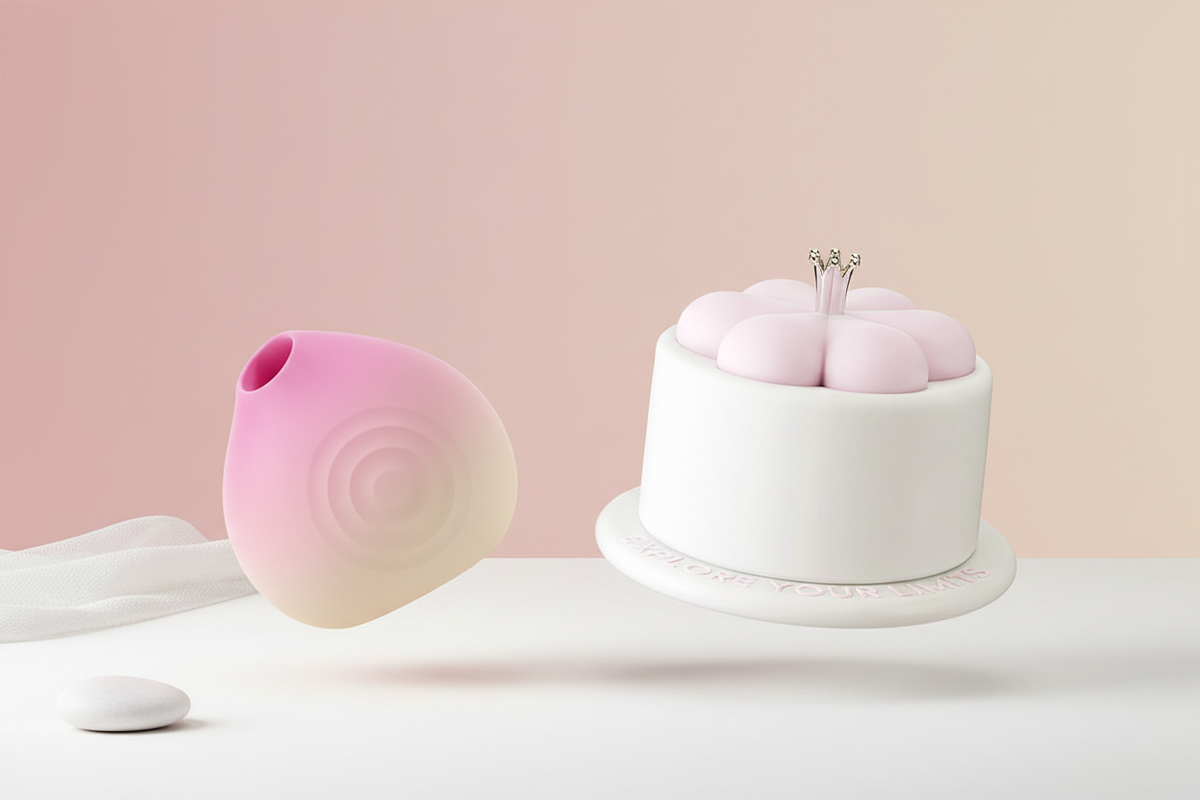

Before you decide between these two technologies, understand this: they're not competitors. They're different languages. One speaks in focused pulses of air; the other in direct mechanical vibration. The question isn't which is "better" — it's which one your body understands more clearly.
Why This Comparison Actually Matters
Most buying guides for pleasure products treat technology differences as marketing features. "11 intensity levels!" "App-controlled!" "Heating function!" These details matter, but only after you understand the fundamental mechanism behind the device.
Air pulse and traditional vibration create pleasure through completely different physical processes. Choosing between them without understanding this difference is like choosing a car based on color before deciding whether you need an automatic or manual transmission.
This guide breaks down the technology, the experience, and the practical decision framework — with recommendations matched to real user profiles from Lumakind's curated collections.
The Core Difference: How They Work
Air Pulse Technology (Negative Pressure Pulsation)
Inside an air pulse device, a small diaphragm rapidly changes air pressure within a sealed chamber. When the device's opening forms a light seal over the clitoral area, those pressure changes create rapid air pulses that move through the seal — stimulating nerve endings without direct mechanical contact.
The sensation is often described as focused, rhythmic, and distinct from anything produced by traditional motors. Because the stimulation doesn't rely on friction, many users find it creates a faster, more intense response with less numbing over time.
What this means practically: The technology requires a light seal, not hard pressure. The opening must sit lightly over the clitoris. Pushing the device down breaks the air dynamics and eliminates the effect. This is the single most common reason first-time users say air pulse "doesn't work" — not because the technology failed, but because the technique wasn't right.
Best for: Users who want focused, intense stimulation; those who find direct vibration numbing; people ready to learn a brief positioning technique (light seal + patience with the lowest setting).
Traditional Vibration Technology (Direct Motor Oscillation)
A traditional vibrator uses an offset-weight motor that rotates at high speed, creating oscillation. That movement is transmitted through the device's body directly to the skin. The intensity depends on motor power, frequency (Hz), and the material through which vibration travels.
The sensation is broader, more direct, and immediately understandable. You don't need to learn a specific seal technique or positioning method. You apply the device, adjust intensity, and respond to the direct stimulation.
What this means practically: Traditional vibration is more forgiving as a first experience. It allows free movement, varying pressure, and easy repositioning without losing the stimulation mechanism. The trade-off is that high-frequency vibration can become numbing over prolonged use for some users, and the stimulation is less focused than air pulse.
Best for: First-timers who want simplicity; users who prefer direct, broad stimulation; anyone who wants to explore without learning a new technique first.
Air Pulse vs Traditional Vibrator: Comparison Table

The Experience Difference: What Users Actually Feel
The chart above summarizes the technical and experiential differences, but the real distinction is simpler than any specification sheet suggests.
Air pulse feels like focused attention. It concentrates stimulation on a precise area. The intensity builds gradually when used correctly — starting with gentle pulses and increasing to stronger pressure waves. Many users describe the sensation as "deeper without being harsh," which reflects the technology's ability to stimulate nerve endings through air dynamics rather than surface friction.
Traditional vibration feels like direct contact. It stimulates a broader area with consistent mechanical movement. There's no learning curve for positioning, which makes it immediately accessible. The sensation is more predictable — what you feel at second one is what you'll feel at minute ten, unless you change intensity settings.
This doesn't mean one is more pleasurable than the other. It means they create pleasure through different pathways. Some users respond strongly to focused intensity; others prefer broad, direct stimulation. There's no universal right answer — only the answer that matches your body's response.
The Quick Decision Framework
If you're staring at product pages and feeling overwhelmed, use this framework rather than comparing every specification:
Choose Air Pulse if:
- You want focused, intense stimulation
- You're comfortable with a brief learning curve (light seal, start low, add lubricant around the rim)
- You find direct vibration numbing or too intense at higher settings
- You prefer a technology that builds intensity gradually rather than delivering it immediately
Choose Traditional Vibration if:
- You want simplicity and immediate feedback
- You prefer direct, broad stimulation without positioning requirements
- You're exploring for the first time and want the lowest barrier to entry
- You value flexibility — the ability to move freely, change pressure, and reposition without losing stimulation
Not sure yet? This is the most common and practical scenario. Start with traditional vibration — specifically a simple, well-designed device — to understand your basic preferences. Once you know whether you respond well to focused stimulation, adding an air pulse device becomes an informed upgrade rather than an uncertain experiment.

How This Technology Fits Real Products
The comparison above isn't abstract. It directly determines which products from Lumakind's collections match your needs.
For the Air Pulse Path
Zemalia Peachy Clit Sucking Vibrator — AUD $79.00
- Focused air pulse opening sized for average anatomy
- 5 intensity levels starting genuinely low — not just "low for people who like high"
- Small, quiet, travel-friendly; waterproof for easy cleaning
- USB rechargeable; body-safe silicone
This is the benchmark product for understanding air pulse technology. Its opening size, intensity range, and build quality make it suitable for both first exploration and ongoing use. At AUD $79, it doesn't require a premium investment to learn whether this technology works for you.
For the Traditional Vibration Path
While air pulse represents a focused approach, traditional vibration appears across multiple Lumakind collections — from the Beginner Friendly series to the Clitoral Stimulators collection's vibration-focused options. The key feature to look for is a motor with sufficient power range and a body shape that allows direct, controlled application.
For users who want to explore traditional vibration with more features, the SVAKOM Uneco Flapping G-Spot & Clitoral Vibrator — AUD $149.00 offers both traditional vibration and an additional flapping motion, giving you two sensation modes within one device. The app control allows granular intensity adjustments — valuable once you understand your preferences and want to customize them.
For Users Who Want Both Paths Over Time
Some users eventually discover that they enjoy both technologies for different contexts — focused intensity for quick response, traditional vibration for longer, more exploratory sessions. The Cake Night Light Wearable Clit Suction & G-Spot Vibrator Set — AUD $188.00 combines air pulse suction with traditional vibration and includes app-controlled partner play, making it a long-term investment rather than a single-purpose purchase.
The Practical Reality: There Is No Wrong First Choice
If you choose air pulse first and discover you prefer traditional vibration, the Peachy still provides valuable information — you've learned something specific about your body's response to focused stimulation. If you choose traditional vibration first and later explore air pulse, you've built a foundation of understanding that makes the learning curve much shorter.
The only wrong choice is buying a device without understanding what technology it uses and why that matters for your experience. This guide exists to eliminate that confusion.
This comparison was developed from actual product specifications at Lumakind and verified user experience patterns. The visual chart above summarizes the key differences for quick reference. If you have questions about which technology matches your preferences, reach out — there's no awkwardness in asking for clarity before buying.
FAQ
- What's the difference between air pulse and traditional vibrators? — Air pulse stimulates the clitoris with rhythmic pressure waves through a sealed chamber — no direct contact. Traditional vibrators stimulate through direct physical vibration of a motor. Air pulse feels like pulsing, fluttering suction; vibration feels like buzzing or rumbling against the skin.
- Is an air pulse vibrator better than a regular vibrator? — Not universally — it depends on your body. Many people find air pulse brings faster orgasms and causes less numbness; others prefer the broad, familiar sensation of traditional vibration. Many people own both.
- Do air pulse vibrators actually work? — Yes. Air-pulse technology (pioneered by Womanizer, popularised by Satisfyer) uses a diaphragm to pulse air at the clitoris. User research and reviews consistently report faster average time-to-orgasm (often under 5 minutes) than traditional vibration.
- Are air pulse vibrators safe? — Yes. Because there's no direct friction, air pulse is generally gentle on sensitive tissue. Choose body-safe silicone models and clean after every use.
- Can beginners use an air pulse vibrator? — Yes, but start on the lowest setting — the sensation can be intense at first. Many guides recommend a traditional vibrator as a gentler entry point.
- Air pulse vs suction vibrator — what's the difference? — They're often used interchangeably, but technically most "suction" toys are air-pulse: they pulse air rather than literally sucking. True suction is rarer; air pulse is the dominant technology.
- Which feels better: air pulse or vibration? — Entirely personal. Air pulse feels like oral sex; vibration feels like strong buzzing. If you can, try both — our range includes both types so you can compare.


