

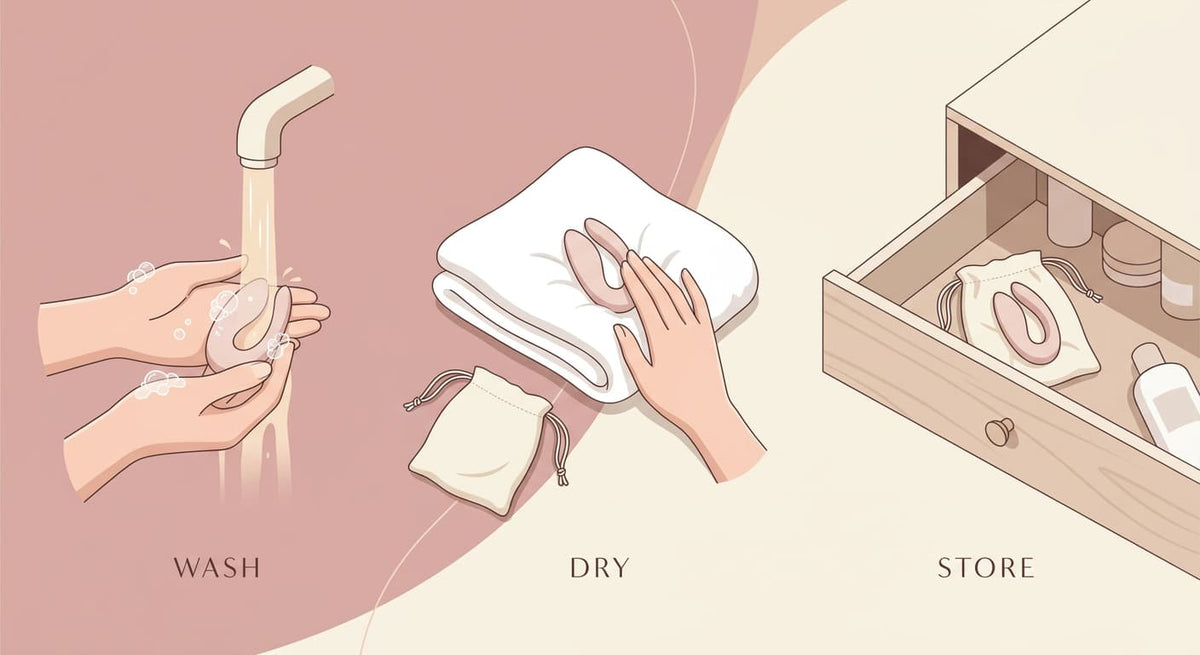

A well-cared-for device lasts longer, performs more consistently, and removes the hygiene anxiety that stops some people from using it regularly. This isn't complicated — it just needs to become a habit as automatic as washing your hands.
Why Care Matters More Than You Think
Most people think of cleaning as something you do "when needed." For intimate wellness products, it should be something you do every time — not because the device is dirty, but because consistency eliminates both health risks and the mental friction that stops people from reaching for their products regularly.
The connection between care and usage is direct: if cleaning feels complicated or uncertain, people use their device less often. If cleaning is simple and automatic, usage becomes natural. This guide makes it automatic.
Before First Use: The Initial Clean
Even new products from verified sources should be cleaned before first contact. Manufacturing processes, packaging materials, and handling during shipping mean that "new" doesn't mean "ready for intimate use."
What to use: Warm water and a mild, unscented soap — or a dedicated intimate wellness cleaner. Avoid antibacterial soaps with harsh chemicals; they're designed for surfaces, not sensitive tissue.
How: Rinse the device thoroughly under warm running water. Apply soap to your hands (not directly to charging ports), gently clean all surfaces, then rinse again. For air pulse devices, pay attention to the opening — residues can accumulate there without being visible.
Dry: Use a clean, lint-free towel. Don't use paper towels — they leave fibers that stick to silicone surfaces. Air-drying works too, but only in a clean environment away from dust.
After Every Use: The 60-Second Routine
This is the habit that changes everything. After use, the device should be rinsed immediately — not later, not "when I remember." Body fluids dry quickly, and dried residue is harder to remove than fresh residue.
For waterproof devices (IPX7):
- Rinse under warm water immediately after use
- Apply mild soap, clean gently, rinse thoroughly
- Pat dry with a clean towel
- Store in a clean pouch or container
For non-waterproof devices:
- Wipe with a damp cloth using warm water and mild soap
- Avoid charging ports and any openings
- Use a dedicated toy cleaner for deeper cleaning (spray, wipe, air dry)
- Never submerge
Time investment: 60-90 seconds. The mental cost of not doing it: anxiety about hygiene, reduced usage, and gradual material degradation.
Deep Clean: Once a Month
Even with consistent after-use cleaning, a monthly deeper clean extends device life and ensures complete hygiene.
Waterproof silicone devices:
Submerge in warm soapy water for 5 minutes. Gently clean the opening with a soft cloth or cotton swab (not metal tools). Rinse thoroughly and dry completely before storage.
ABS plastic or hard-shell components:
Wipe with a damp cloth. For stubborn residue at joints or seams, use a cotton swab dipped in warm soapy water. Dry immediately — water trapped in seams can affect electronic components over time.
Glass or steel devices:
These can be fully sterilized. Boil for 3-5 minutes (glass) or use a medical-grade sterilizing solution (steel). This is the highest hygiene standard available for intimate products.
Storage: The Forgotten Step
How you store a device affects both hygiene and longevity. Loose storage in drawers — where the device contacts other objects, collects dust, or gets scratched — degrades both the material surface and the hygiene standard.
Best practice: A clean, dry fabric pouch (many Lumakind products include these) or a dedicated container. Store away from direct sunlight — UV exposure degrades silicone over time. Keep separate from other materials — some lower-grade plastics can cause chemical reactions when stored in prolonged contact with medical-grade silicone.
What this means practically: If you travel, use the pouch. If you live in shared accommodation, the pouch provides an additional layer of privacy beyond the packaging. Storage isn't just about cleanliness — it's about maintaining the device's material integrity over its full lifespan.
Material Safety Determines Cleaning Method
The cleaning routine you use should always match the material specification of your device. This is why material verification — covered in our body-safe materials guide — isn't just a purchase decision; it's a maintenance decision.
Medical-grade silicone, ABS plastic, borosilicate glass, and surgical-grade steel all allow thorough cleaning. Lower-grade blends — jelly rubber, unverified TPE, or PVC with softeners — don't respond to cleaning the same way because the bacteria isn't just on the surface; it's inside the porous material structure.
This is why Lumakind's sourcing policy requires material certification for every product: not just for health at the point of purchase, but for hygiene maintenance over the entire lifespan of the device.
Common Mistakes (And How to Avoid Them)
Using antibacterial soap or alcohol-based cleaners. These can degrade silicone surfaces over time and cause irritation on sensitive tissue. Stick to mild, unscented soap or dedicated toy cleaners.
Submerging non-waterproof devices. Check the IP rating (IPX7 = waterproof; lower ratings = water-resistant at best). When in doubt, wipe rather than submerge.
Storing before fully dry. Moisture trapped in storage creates bacterial growth environments. The device should be completely dry before being placed in a pouch or container.
Using paper towels for drying. They leave fibers that stick to silicone. A clean, lint-free cloth is the correct tool.
Ignoring charging ports during cleaning. Even waterproof devices have charging ports that shouldn't be submerged for extended periods. Clean around them carefully.
How Care Connects to Product Selection
The maintenance routine you adopt should match the materials and features of the products you choose. Here's how cleaning requirements align with real products from Lumakind's collections:
Air pulse devices like the Zemalia Peachy require attention to the opening during cleaning. Residue can accumulate in the air pulse opening without being visible. A cotton swab with warm soapy water reaches these areas safely without damaging the silicone seal.
Wearable or app-controlled devices like the SVAKOM Erica and the KISTOY Bobo combine silicone bodies with electronic components. Cleaning focuses on the silicone surfaces while protecting charging ports and control interfaces. The silicone construction means these devices can be cleaned thoroughly without material degradation — a benefit that lower-grade blends don't offer.
For users exploring glass or steel options: These materials allow the most intensive sterilization methods. If complete hygiene is your highest priority — whether for health reasons or personal preference — these materials provide the standard that silicone approaches but doesn't fully match.
The Bottom Line
Cleaning isn't a chore you add to using a pleasure product. It's part of using it well. A 60-second routine after each use — rinse, mild soap, dry, store — eliminates hygiene anxiety, extends device life, and makes the experience feel more natural rather than more complicated.
When you understand the connection between material (why only certified silicone, ABS, glass, or steel matters) and cleaning (why the method must match the material), maintenance becomes logical rather than arbitrary. The device you choose, the way you clean it, and how long it lasts are all connected — and all start with the same decision: verified, certified, body-safe materials.
This guide connects cleaning practices to material science and brand verification standards at Lumakind. We don't treat hygiene as an afterthought — it's integrated into how products are selected, how they're described, and how they're maintained. If you have questions about cleaning a specific device, reach out. There's no awkwardness in confirming the right method before using it.


